Deciding between local crew vs foreign crew China is rarely a creative question. It is an operational one. The structure you choose affects permits, budget, customs clearance, insurance exposure, and timeline stability. Many international producers initially assume that flying in a trusted team guarantees control. On the ground, however, filming in China introduces regulatory layers and logistical variables that shift that calculation.
This guide examines how productions actually function across major Chinese cities. It outlines when local hiring reduces risk, when a fly-in team adds value, and how hybrid structures often provide the most stable solution.
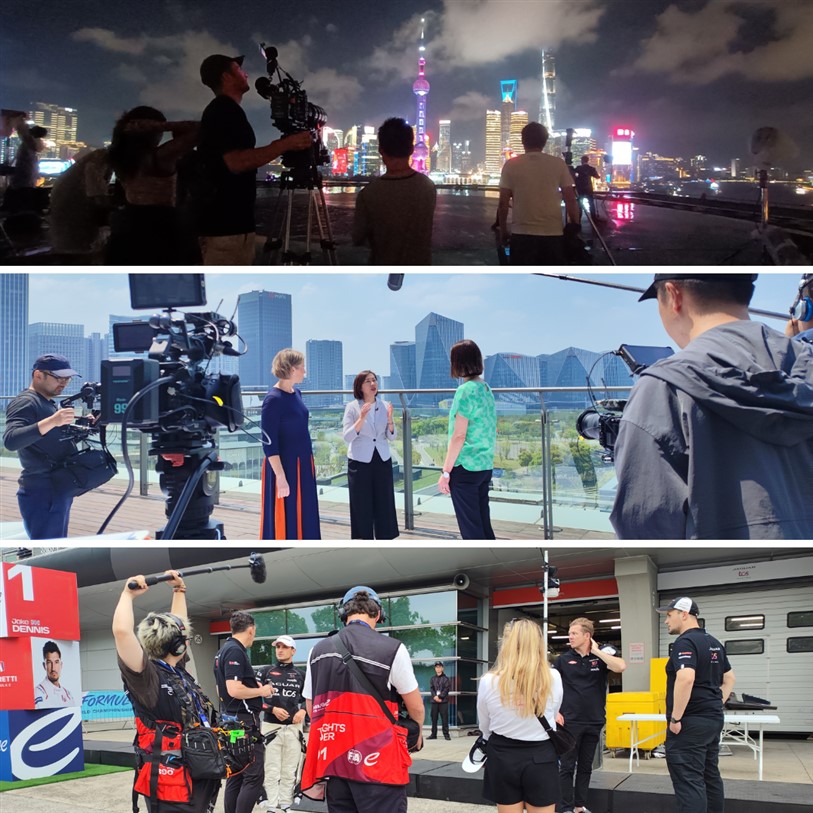
Regulatory Landscape and Local Crew vs Foreign Crew China
Crew composition influences permit classification. Productions involving foreign personnel may trigger additional documentation requirements. Authorities often request:
- Passport copies
- Role descriptions
- Employer information
- Detailed project summaries
When the majority of key crew are local, permit review can proceed more quickly. Administrative language barriers decrease, and regulatory communication remains clearer.
Foreign teams do not automatically complicate approvals. However, the presence of foreign directors or DOPs can shift how a project is categorized. In some cities, that leads to closer scrutiny.
For shoots involving multiple regions, cross-city production magnifies these differences. Each municipality interprets foreign involvement independently. Planning must account for those regional variations early.
Operational Control: What Changes on Set
International producers often associate foreign crews with creative consistency. That assumption holds in certain contexts. Yet operational control in China depends less on nationality and more on communication structure.
Local crews understand:
- Municipal filming permits procedures
- District-level enforcement habits
- Site-specific restrictions
- Informal approval channels
Foreign crews bring stylistic familiarity but may rely heavily on translation during negotiations. This slows real-time decision-making.
A bilingual crew structure reduces friction. Without clear communication lines, even simple location adjustments can stall production for hours.
In practice, many productions retain foreign heads of department while sourcing local technical support.
Equipment Strategy: Ship or Source Locally
Equipment decisions closely tie to the local crew vs foreign crew China debate. A fly-in crew often prefers its own camera package. Shipping introduces ATA carnet China paperwork and customs risk.
Customs delays remain one of the most common production disruptions. Inconsistent equipment declarations can lead to inspection holds.
Local equipment rental China networks are extensive in Tier-1 cities. High-end cinema cameras and lighting packages are widely available. Regional cities may offer fewer specialty items but can source from larger hubs.
Shipping makes sense when:
- The production relies on proprietary rigs
- Specialized lenses are unavailable locally
- Time allows for carnet processing
Renting locally reduces customs exposure and simplifies compliance reporting during permit applications.
Production Logistics China: Cost Implications
Budget structure changes significantly depending on crew origin.
Flying in a full foreign crew requires:
- International airfare
- Work visas where applicable
- Hotel blocks
- Per diems
- International insurance coverage
Local crews reduce travel expenses but may increase coordination costs if communication gaps exist.
The production budget China calculation should also include contingency. Customs inspections, delayed gear, or permit clarifications can add unexpected days.
Regional differences affect cost models. Shanghai and Beijing offer competitive local crew rates due to depth of talent pools. In smaller cities, limited availability can increase day rates.
A balanced budget analysis should compare total exposure rather than day rate alone.
Local Crew vs Foreign Crew China: Timeline Compression Risks
Time pressure exposes structural weaknesses.
Foreign crews unfamiliar with local administrative patterns may underestimate permit processing windows. Adjustments that require written approval can take longer than expected.
Local line producer China teams anticipate documentation checkpoints. They schedule buffer periods around holidays and regulatory review cycles.
Compressed schedules amplify risk in cross-city production. Moving a fly-in crew between cities introduces additional hotel bookings, freight coordination, and ground transport planning.
Weather disruptions compound the issue. Reapplying for modified filming permits may require fresh documentation if scope changes.
Hybrid models often perform best under compressed timelines.
Crew Hierarchy and Role Alignment
Western productions frequently operate with flat communication structures. In China, formal hierarchy carries greater weight in negotiations with authorities and locations.
When using local crews:
- Clear title designation improves compliance communication
- Government officials expect defined points of contact
- Responsibility for permit conditions must be assigned explicitly
Foreign creative leads can function effectively, but administrative authority should remain clear.
Confusion over who represents the production can delay approvals. Titles must align across contracts, permits, and crew lists.
Understanding these structural expectations avoids misunderstandings during sensitive shoots.
Location Scouting and Regional Realities
Location scouting China involves regulatory evaluation alongside aesthetic assessment. Local crews often recognize unofficial filming sensitivities in specific districts.
For example:
- Certain public plazas may appear unrestricted but require district clearance
- Industrial zones often demand prior notice
- Historic sites impose strict filming windows
Foreign crews unfamiliar with these patterns may assume universal access.
In second-tier cities, local authorities may prioritize safety oversight more heavily. Security staffing requirements can increase unexpectedly.
Producers should assess whether local knowledge reduces location risk before committing to a full fly-in team.
Drone Operations and Technical Compliance
Drone regulations China vary significantly between provinces. Foreign operators may not automatically meet licensing standards.
Using local licensed pilots simplifies compliance. Airspace approvals often require local registration details.
Transporting foreign drones under ATA carnet China does not guarantee operational clearance. Separate aviation approvals remain mandatory.
Technical frequency regulations also affect wireless systems. Local crews understand permitted frequency bands and avoid interference conflicts.
Technical missteps can halt production. Compliance knowledge matters more than familiarity with a specific drone model.
Cultural Workflow Differences
Production rhythm differs from Western environments. Decision-making often relies on formal acknowledgment rather than informal verbal agreement.
Local crews anticipate these procedural expectations. They build additional time into schedule frameworks.
Foreign crews sometimes misinterpret silence as approval. In reality, written confirmation may still be pending.
Clear documentation discipline reduces friction. Confirmations should be recorded and distributed to all departments.
This procedural awareness becomes critical during sensitive shoots.
When Hybrid Structures Deliver the Most Stability
Many international projects adopt a mixed model:
- Foreign director or DOP
- Local technical crew
- Local line producer China oversight
- Locally sourced camera package China
- Foreign specialty operators if necessary
This structure balances creative control with administrative fluency.
Hybrid teams reduce customs risk, simplify filming permits coordination, and preserve production continuity.
Each project requires independent evaluation. Documentary teams may prioritize local integration. Commercial shoots focused on brand consistency may justify select fly-in roles.
The question is not nationality. It is operational exposure.
Decision Framework for International Producers
When evaluating local crew vs foreign crew China, consider:
- What level of regulatory oversight applies to the project?
- Does shipping gear introduce unacceptable customs risk?
- Are timelines flexible enough to absorb permit revisions?
- How many cities are involved?
- Where does creative control outweigh logistical complexity?
There is no universal answer. Conditions vary between Shanghai, Beijing, Shenzhen, and inland production centers.
Filming in China demands alignment between creative ambition and administrative structure. Crew decisions shape that alignment more than any other variable.
Careful planning, realistic budgeting, and transparent documentation allow producers to select the structure that best protects schedule, compliance, and creative goals.